
Podcast Booking for Physicians That Pays Off
 Sam Treminio
•
Sam Treminio
•
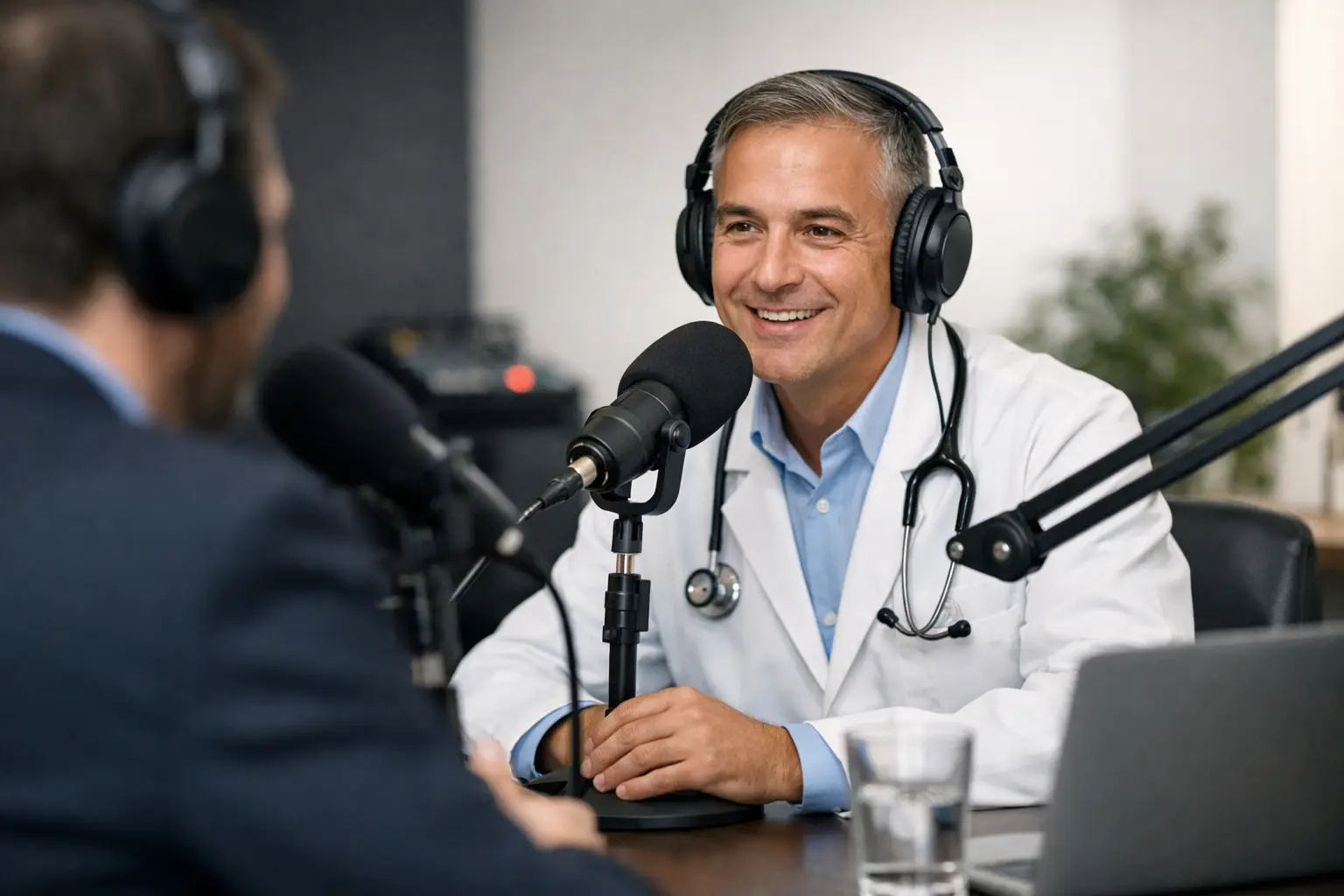
A physician can spend years building clinical credibility and still be invisible to the people who matter most outside the exam room. That is the real opportunity in podcast booking for physicians. The right interview does more than add a media logo to your website. It puts your expertise in front of patients, referral partners, conference organizers, practice buyers, brand partners, and health-conscious audiences who are already paying attention.
For physicians with a personal brand, private practice, book, course, consulting offer, or speaking platform, podcast appearances are not vanity media. They are trust accelerators. But only when the strategy is built around relevance, positioning, and business outcomes.
Why podcast booking for physicians works
Medicine is a trust-based business. People do not choose a physician, advisor, or expert voice the way they choose a commodity. They look for competence, clarity, and confidence. Podcast interviews create space for all three.
A strong interview lets a physician explain a point of view instead of shrinking it into a social caption. You can show how you think, how you communicate, and what makes your approach different. That matters whether your goal is cash-pay patient growth, more referral relationships, better Google search visibility, or a stronger platform for books and speaking.
There is also a practical advantage. Podcasts have long shelf lives. A good episode can rank in search, get shared in newsletters, and keep sending credibility signals months after it airs. Compared with one-off media hits, the value compounds.
Still, not every doctor should chase podcast exposure in the same way. A plastic surgeon trying to attract ideal-fit patients needs a different booking strategy than a physician executive selling into healthcare organizations. A longevity expert with a consumer audience will want very different shows than a physician consultant serving founders or enterprise buyers. The channel works, but the target has to match the business.
The biggest mistake physicians make with podcast outreach
Most physicians assume bigger shows mean better results. That sounds logical. It is also where many campaigns go off track.
Audience size matters, but audience alignment matters more. A mid-sized podcast with the exact right listeners can outperform a large, broad show that generates plenty of views and zero action. If you are a functional medicine physician, a niche wellness show with loyal listeners may be far more valuable than a general entrepreneurship podcast. If you are a physician founder, a business podcast with healthcare operators in the audience may beat a mainstream health show every time.
The second mistake is pitching credentials instead of stories. Hosts are not booking a CV. They are booking a conversation their audience will care about. Board certifications, academic appointments, and publications help establish authority, but they rarely win the slot on their own. What gets attention is a sharp angle, a clear takeaway, and a reason this guest will make the episode better.
That is why generic outreach underperforms. Physicians are busy, and many outsource visibility too late – after they have already sent broad, forgettable pitches to a pile of irrelevant shows. By then, the market is not rejecting the physician. It is rejecting bad positioning.
What makes a physician bookable
Hosts want guests who are credible, concise, and useful. Physicians already have a built-in advantage on the first point. The challenge is the second and third.
Being bookable means translating expertise into strong podcast topics. A physician who says, “I can talk about hormone health,” is easy to ignore. A physician who says, “I help high-performing women understand why normal lab work still misses the root cause of fatigue,” gives the host something specific to work with.
This is where positioning does the heavy lifting. The best physician guests usually have a defined lane, a repeatable message, and a set of talking points that connect expertise to outcomes. That might mean preventive cardiology for executives under chronic stress, fertility education for women over 35, or medical leadership lessons from running a multi-site practice.
Bookability also depends on presentation assets. A polished bio, quality headshot, smart interview topics, and prior media proof make it easier for a host to say yes. None of that needs to feel inflated. It needs to feel ready.
How to approach podcast booking for physicians strategically
A serious booking campaign starts with business goals, not a podcast list. If the goal is patient acquisition, target shows that influence ideal patients or trusted local and digital referral ecosystems. If the goal is speaking, thought leadership, or brand partnerships, focus on shows where event organizers, industry buyers, and peer experts pay attention.
From there, show selection should filter for fit. The best targets usually line up on five fronts: audience relevance, host quality, episode consistency, guest standards, and topic overlap. This is where a lot of time gets wasted. A show may look perfect on paper and still be wrong if the host rarely interviews experts, the audience is misaligned, or the episode quality is weak.
Pitching needs to be custom. Not dramatic. Not bloated. Just sharp. The host should immediately understand why this physician belongs on the show, what the audience will gain, and why now is a good time for the conversation. Good outreach feels researched because it is researched.
Then comes logistics, which is where busy physicians often lose momentum. Outreach follow-up, scheduling, prep, reminders, asset delivery, and repurposing all sound minor until they start stacking up. The difference between a clean booking system and a messy one is often the difference between a campaign that compounds and one that stalls after two appearances.
What results physicians should actually expect
Podcast interviews can drive serious outcomes, but the timeline and result type depend on the offer behind the expert.
Some physicians see direct patient inquiries after appearances, especially in cash-pay, elective, wellness, aesthetics, and specialty niches where patients actively research providers. Others get more indirect value: credibility for partnership conversations, warmer traffic to a book or lead magnet, more invitations to speak, stronger branded search results, and better conversion when prospects vet them online.
This is where expectations need to stay honest. Podcast booking is not magic. One interview rarely changes a business. A consistent run of the right interviews can.
It also depends on whether the physician has a monetizable visibility path. If a doctor has no clear personal brand, no strong bio, no content ecosystem, and no next step for listeners, the upside is limited. The audience may like the interview and still do nothing. On the other hand, a physician with a defined message and clear positioning can turn podcast guesting into an authority engine.
Done-for-you vs doing it yourself
Some physicians can handle outreach internally. Most should not.
DIY booking costs more time than people expect. Researching relevant shows, finding contact details, writing personalized pitches, following up consistently, prepping for interviews, and tracking results is not a side task. It is a system. If that system is not built well, the campaign turns into sporadic outreach with weak conversion.
A done-for-you model makes sense when the physician values speed, precision, and low lift. It is especially effective for doctors balancing patient load, leadership responsibilities, media opportunities, and brand growth at the same time. The agency should not just book appearances. It should shape the positioning, narrow the target list, build better pitch angles, and keep quality control high.
That is the difference between random exposure and strategic visibility. It is also why performance accountability matters. If a booking partner cannot speak clearly about targeting, process, and expected outcomes, the physician is probably buying activity instead of results.
Podcast Cola operates in that results-first lane by treating booking as a visibility system, not a spray-and-pray media tactic. For physicians who want authority without managing the moving parts, that matters.
How physicians can get more from every podcast appearance
Getting booked is only half the value. What happens after the interview is where a lot of return gets either created or lost.
A physician should be ready with a clear intro, a few strong stories, and a simple call to action that fits the audience. That call to action might be a consult, a book, a newsletter, an assessment, or a speaking inquiry. It should feel natural to the conversation, not bolted on at the end.
Repurposing also matters. One strong episode can become short-form clips, quote graphics, website proof, speaker reel material, email content, and sales collateral. This is one reason podcast guesting works so well for physicians building a public-facing brand. It creates durable authority assets, not just a single media moment.
The physicians who win with podcasting do not chase appearances for ego. They use them to control their narrative, show depth, and reach the right audience repeatedly. That is a much better game.
If your expertise already changes lives, the next move is making sure more of the right people hear it.


