
How to Turn Podcast Interviews Into Content
 Sam Treminio
•
Sam Treminio
•
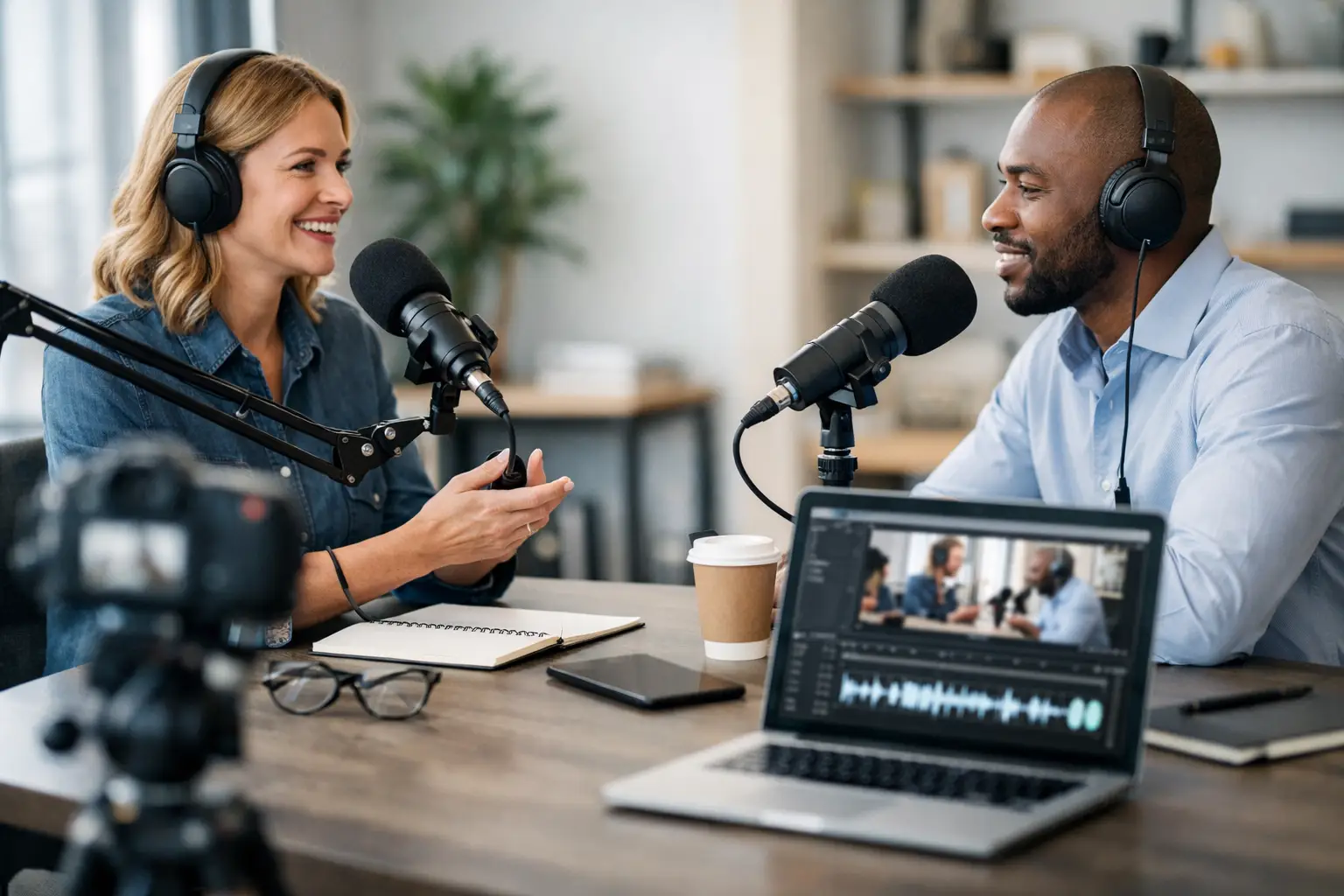
Most experts record a great interview, share the episode once, and move on. That is a waste of signal, authority, and reach. If you want to turn podcast interviews into content that keeps working after the episode airs, you need a system that treats every appearance like a content asset, not a one-time media hit.
For founders, authors, consultants, and B2B leaders, this matters because podcast appearances already contain the hardest part of content creation – clear ideas spoken in your natural voice. You have positioning, stories, objections, examples, and credibility baked into the conversation. The smart move is not to keep creating from scratch. The smart move is to extract more value from what you already said.
Why podcast interviews are high-value content assets
A strong podcast interview is different from a generic social post or a rushed blog draft. You are answering real questions, reacting in real time, and explaining your expertise in a way that sounds human. That makes the material unusually useful for repurposing.
It also solves a problem busy executives run into constantly. You know your subject. You can speak about it for 30 minutes. But sitting down to write ten LinkedIn posts, a thought leadership article, email copy, and short-form video scripts is another story. The interview gives you the raw material. Repurposing gives you distribution.
There is also a trust advantage. When your ideas appear first on a third-party show, they carry borrowed credibility. You were invited, introduced, and positioned as someone worth listening to. When you reuse that material across your own channels, the authority comes with it.
How to turn podcast interviews into content without making it messy
The biggest mistake is trying to repurpose everything. Not every minute deserves a carousel, a reel, and a blog section. If you want this to drive business results, you need to organize by message, not by format.
Start with the core themes from the interview. Usually, one episode contains three to five usable angles. That might include a strong founder story, a contrarian opinion, a tactical framework, a client example, and a memorable line that can stand alone. Once you identify those angles, content creation gets faster because you are shaping ideas people actually care about instead of slicing random clips.
Step 1: Pull the moments that support your authority
Go through the interview transcript and highlight statements that do one of three things. They prove expertise, show a point of view, or create demand for your offer. If a section is interesting but disconnected from your business goals, it may still be worth sharing, but it should not lead the repurposing plan.
This is where strategy matters. A physician building a personal brand may want clips that build trust and credibility. A SaaS founder may want sharp commentary on market trends and operational lessons. A consultant may want practical answers that create inbound interest. The best content is not just good. It is aligned.
Step 2: Build one pillar asset from the interview
Before you produce ten smaller assets, create one substantial piece from the episode. That could be a blog article, a polished written Q&A, or a perspective piece based on what you discussed. This gives you a central source to pull from and helps your ideas live beyond the host’s platform.
A written asset also helps with search visibility. Spoken insights disappear quickly unless they are turned into indexable content. If your interview covered a niche topic your buyers search for, this step matters more than the social edits.
Step 3: Break the episode into short-form content by intent
Once the pillar asset is done, turn key moments into smaller pieces. Some clips are built for attention. Others are better for credibility or conversion. Treat them differently.
A bold opinion works well as a short video clip or LinkedIn post. A practical explanation can become a text post, newsletter section, or sales enablement asset. A strong personal story often performs well when turned into short-form video because it creates emotional connection quickly.
Repurposing should not feel like duplication. The same idea can be framed differently depending on the platform and the audience’s mindset there.
The best formats to create from one interview
If the interview is strong, one appearance can fuel weeks of content. The most useful outputs are usually short video clips, quote graphics, written social posts, email copy, blog articles, and talking-point scripts for future videos.
Short clips work because they preserve tone, confidence, and delivery. That matters when your audience is buying your thinking as much as your offer. Written posts work because they let you sharpen the argument and remove filler. Blog content works because it expands the shelf life of your expertise.
There is also a practical advantage to turning podcast interviews into content across multiple formats. Different buyers trust different media. Some will watch a clip. Some will read a post. Some will only engage when they find your ideas in search. Repurposing lets the same interview meet people where they are.
What to keep, what to cut
Not every good interview becomes great content. Podcast conversations are natural, which means they include detours, setup, repetition, and context that does not always translate well outside the episode.
Keep the parts that are specific, opinionated, and outcome-driven. Cut long scene-setting, inside jokes, and anything that needs too much explanation to make sense. If a clip needs a paragraph of context before it becomes useful, it is probably the wrong clip.
This is one of the biggest trade-offs in repurposing. Authenticity matters, but clarity wins. You want the content to sound like you, just tighter.
Why most repurposed podcast content underperforms
Usually, the problem is not the interview. The problem is lazy packaging.
A generic caption like “Had a great time on this podcast” does nothing. A random clip with no hook gets ignored. A transcript pasted into a blog without structure will not hold attention. Repurposing only works when the asset is edited for the audience, not just exported from the recording.
Strong packaging means leading with a clear takeaway, using titles and hooks that create curiosity, and connecting the insight to a business problem your audience actually wants solved. Serious operators do not need more content for content’s sake. They need content that builds authority and moves buyers closer to trust.
A simple workflow for busy founders and executives
If your schedule is packed, the process needs to be operationally light. After the interview is recorded, get the transcript cleaned up, identify the best moments, choose the main themes, and assign each theme a purpose. One may be for SEO. One may be for social engagement. One may be for lead generation. One may support future speaking or PR.
Then batch the outputs. Edit all short clips at once. Write all social posts in one session. Turn the strongest topic into a standalone article. This is how one interview becomes a repeatable authority engine instead of another forgotten media mention.
For many high-level professionals, this is also the point where done-for-you support makes sense. Booking the right shows is only part of the value. The real return comes when the interview is turned into assets that keep attracting attention after publication. That is one reason agencies like Podcast Cola often pair placement strategy with content repurposing support.
The real business case for repurposing interviews
The upside is not just more posts. It is more mileage from the effort you already made.
A single interview can help you stay visible on social, publish informed website content, strengthen search presence, support email marketing, and give your sales team better proof points. It can also reinforce market positioning. If you consistently repurpose interviews around the same strategic themes, your audience starts associating you with those ideas.
That said, there is an it depends factor here. Volume is not the goal. Relevance is. Ten average assets from a weak interview will not outperform three sharp assets from a strong one. Quality of placement still matters. Audience alignment still matters. Message discipline still matters.
That is why the smartest approach starts earlier than repurposing. Get booked on shows that reach the right audience, ask the right questions, and let you speak about the problems you want to be known for solving. When the interview is strategically aligned, the content almost takes care of itself.
Your next podcast interview should not end when the recording stops. If the conversation is good, it should keep selling your expertise long after the episode goes live.


